What medium puzzles need
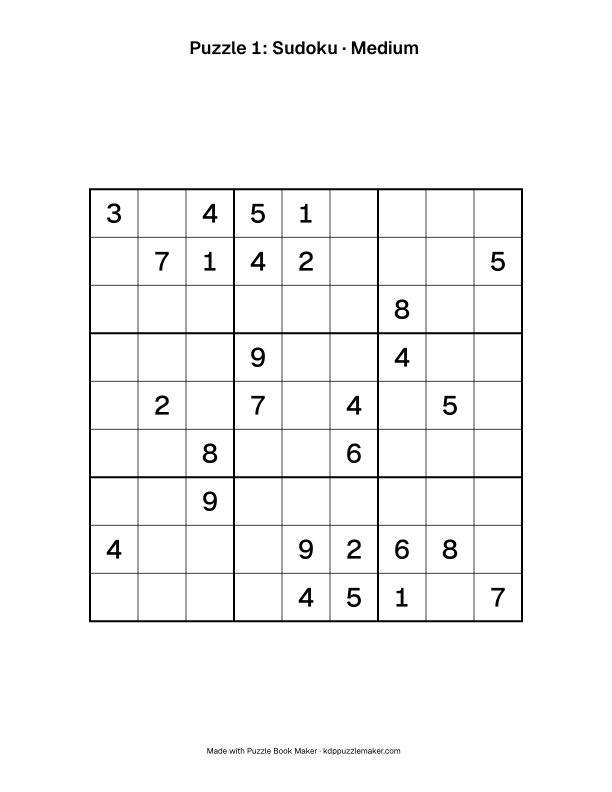
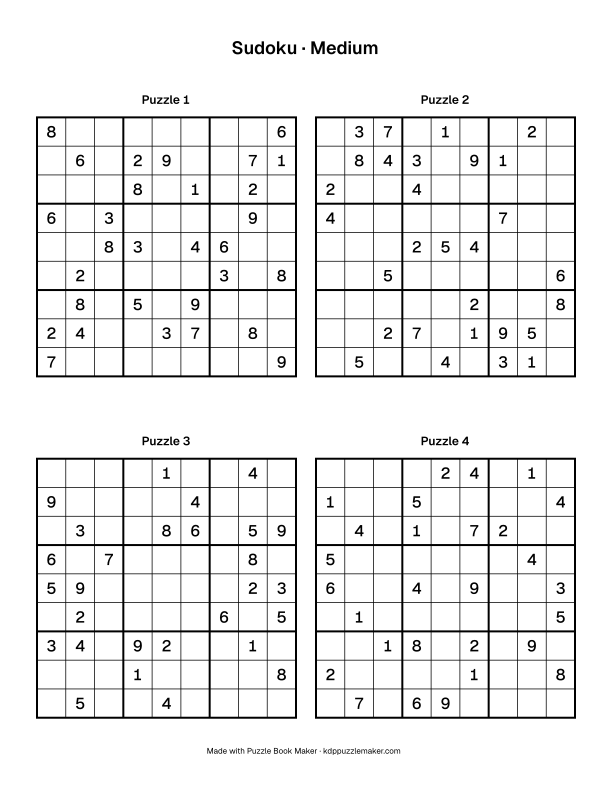
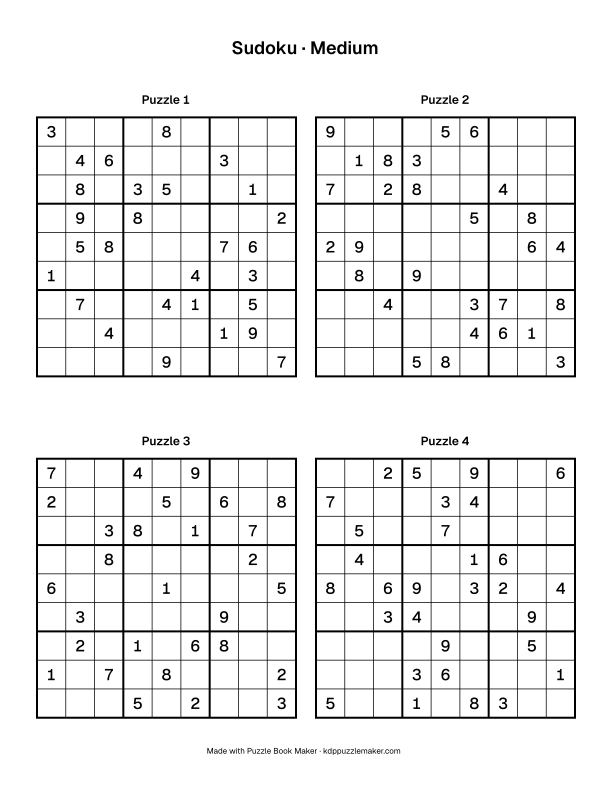
You will use plenty of singles, but each puzzle on this page also needs at least one
pointing pair or triple, box-line reduction, naked pair or hidden pair. None of these places a digit by itself. Each one removes
candidates, and the single that was hiding behind them appears:
- Naked pair: two squares in one row, column or box that can only hold the same two
digits. Those two digits must go in those squares, so cross them off everywhere else in
that row, column or box.
- Hidden pair: the reverse. Two digits that fit in only the same two squares of a
unit; any other candidates in those squares can go.
- Pointing pair or triple: in a box, a digit whose possible squares all sit in one row or column.
It must land on that line inside the box, so it can’t go anywhere else on the line.
- Box-line reduction: the same idea turned around. A digit confined to one box within a row or
column can be removed from the rest of that box.
A worked tip: spotting a naked pair
Say the top row has five digits placed and four empty squares. You note the candidates:
the first blank could be 2 or 6, the second 2 or 6, the third 2, 6 or 9, the fourth 6, 8 or
9. The first two squares share exactly the pair 2 and 6, so between them they use up both.
Cross 2 and 6 out of the other two squares: the third square must be 9, and the fourth is
left with 8. One pair, two digits placed.
The trick is noticing the pair. Scan for squares with only two candidates, then ask whether
another square in the same row, column or box has the same two.
Who this level suits
Medium is for anyone who finishes easy puzzles comfortably and wants a puzzle that takes a
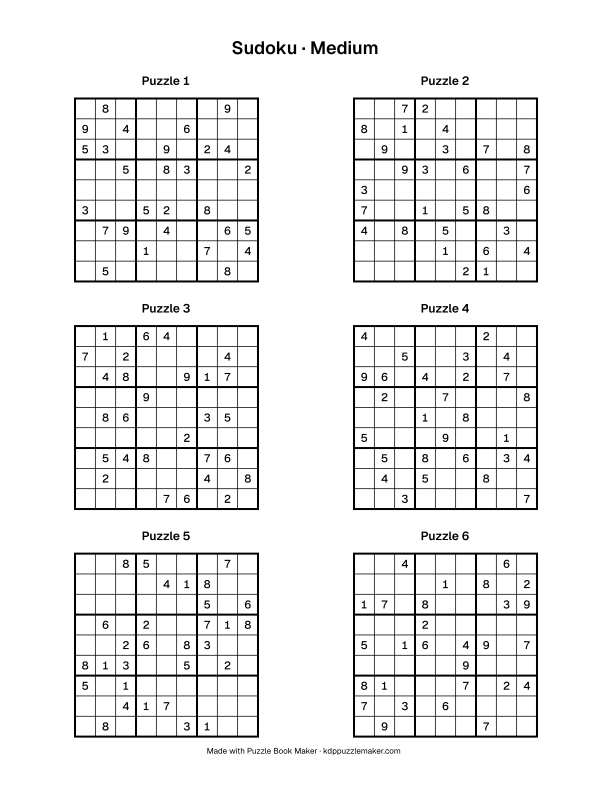
little thought, and it is the natural place to learn pencil marks. The 24-puzzle pack suits a commute or a lunch break: six
sheets, four puzzles each, every answer sheet at the back.
Stuck on a medium puzzle?
- Write every candidate. Patterns are invisible until the marks are on the page. Do
one box at a time and check each against its row and column.
- Look for squares with two candidates. They are where pairs begin.
- Check each box for a line. If a digit’s candidates in a box all share one row, the
pointing rule applies.
- Update the marks after each digit. A placed 6 removes 6 from its row, column and box;
forgetting one of those hides the next move.
When medium flows, try hard sudoku printables, where the patterns
span several rows at once. If it is a struggle, there is no shame in a week of
easy sudoku printables. Every level is on the
sudoku printables page.